
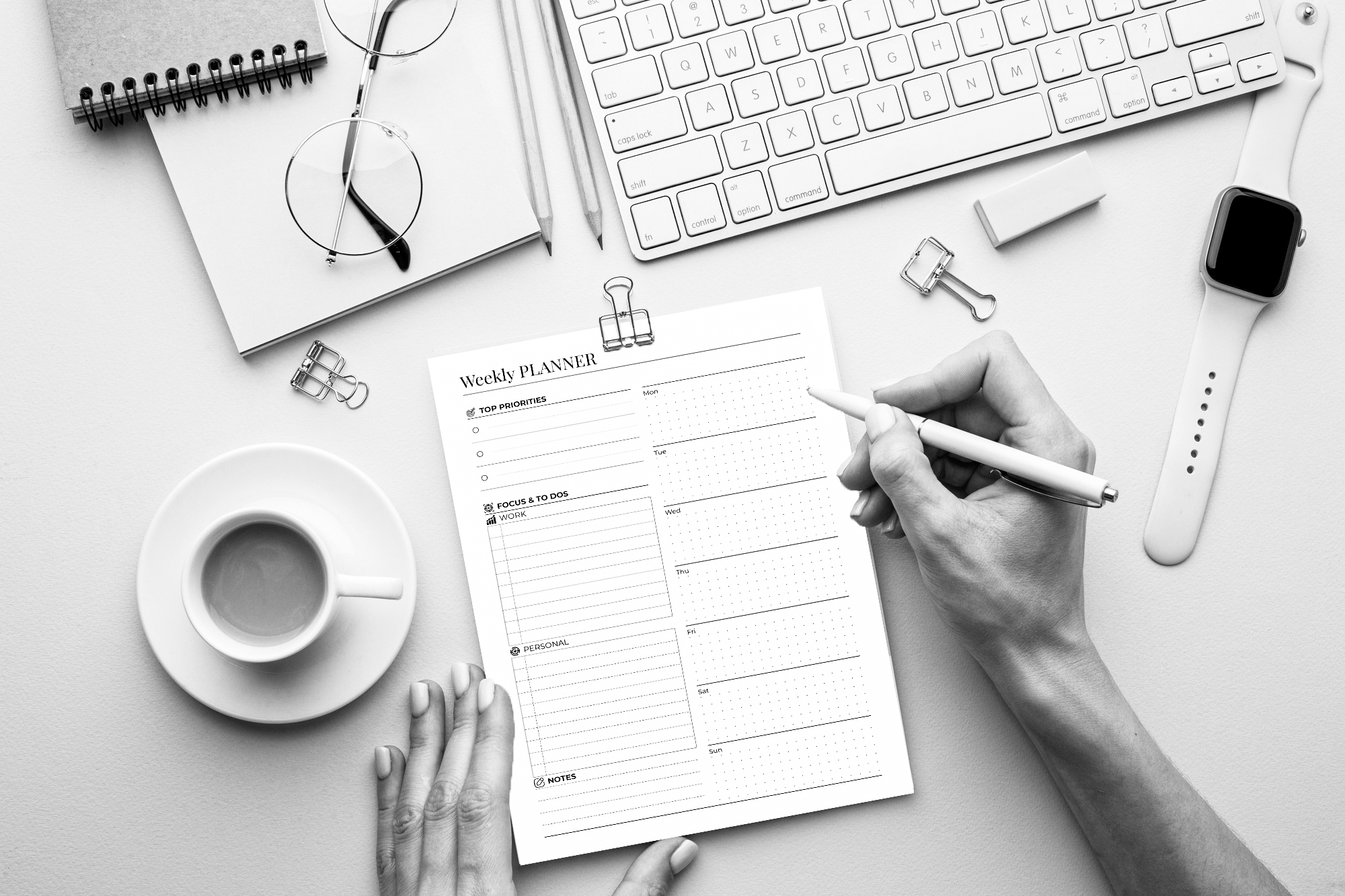
Does your Sunday night feel heavy with the pressure of planning the perfect week? Do color-coded calendars and endless to-do lists leave you feeling more exhausted than empowered?
You’re not alone. In our quest to be productive, we often design planning routines that are unsustainable—systems that look impressive but drain our energy and amplify our anxiety.
True organization shouldn’t feel like a rigid second job. It should feel like a deep breath: a calming, clarifying practice that creates space for what matters most. Let’s build a weekly planning routine that serves you, not one you serve.
The Burnout Planning Trap (And How to Avoid It)
Before we build our new routine, let’s spot the red flags. Burnout planning often involves:
- Over-scheduling: Packing every hour with a task.
- Rigidity: Treating your plan as an unbreakable contract.
- Focusing Only on Output: Listing only tasks, while ignoring energy, priorities, and well-being.
The antidote? A flexible, humane, and intentional approach.
Step 1: The Weekly Review – Look Back to Move Forward
When: Friday afternoon or Sunday evening (choose what gives you peace for the weekend).
Time: 20-30 minutes.
This is your reset button. Don’t skip it.
- Celebrate & Complete: Glance at the past week. What went well? Jot down 3 small wins. Move any unfinished tasks to a separate “Parking Lot” list (we’ll deal with it in Step 2).
- Clear the Decks: Empty your head and all your capture tools (phone notes, random scraps of paper) into one master brain-dump list. This act alone reduces mental clutter dramatically.
Step 2: Connect to Your “Why” – The Heart of Your Plan
Time: 5-10 minutes.
Here’s the crucial shift: Start with your priorities, not your tasks. Ask yourself:
- What is my primary focus for the coming week? (e.g., “Finalize the project proposal,” “Prioritize rest,” “Connect with family”).
- Based on that, what 2-3 outcomes would make this week feel successful?
This step ensures your plan is aligned with your goals, not just filled with random activity. This is also where you review that “Parking Lot” list from Step 1—does any unfinished item still serve this week’s primary focus? If not, let it go or schedule it for much later.
Step 3: Time Blocking – Design Your Week, Don’t Just Fill It
Time: 15 minutes.
Instead of a massive to-do list, assign your tasks to specific days and times. Use a simple digital calendar or paper planner.
- Block Your Non-Negotiables First: Sleep, meals, exercise, family time. Protect these like important meetings.
- Theme Your Days (Optional but Powerful): Give each day a loose focus (e.g., Deep Work Monday, Meeting Tuesday, Administrative Wednesday). This reduces context-switching.
- Schedule “Buffer Time”: For every 60-90 minutes of focused work, block 15-20 minutes of unscheduled time. This absorbs the overflow and prevents the domino effect of one delay ruining your entire day.
- Remember Your Habits: Integrate your keystone habits into these blocks. Planning your gym session or reading time makes them far more likely to happen than if they’re just floating on a list.
Step 4: The Daily Touchpoint – Your Flexible Daily Guide
When: Each morning (or the night before).
Time: 5 minutes.
Your weekly plan is the map; this is your daily driving direction.
- Look at your time-blocked plan for the day.
- Choose 1-3 Most Important Tasks (MITs) that you will commit to completing. These should move you toward your weekly outcomes.
- Practice “Might-Do” Listing: Have a separate, small list of lower-priority tasks you might get to if time and energy allow. This separates the essential from the optional and prevents overwhelm.
Step 5: The Adaptation Principle – Build in Flexibility
A plan is a hypothesis about your week. Life will test it. Build adaptability into the system:
- Weekly Margin: Leave one block (e.g., Friday afternoon) completely unscheduled for catch-up or spontaneous work.
- The “Plan B” Mindset: If your day gets derailed, simply ask: “What’s the one thing I still need to do today to feel on track?” Then do that.
- Review & Pivot: It’s okay to move time blocks around mid-week! Your plan works for you, not the other way around.
The Golden Rule: Plan from a Place of Compassion
The most effective planning routine is one you return to consistently. That only happens if it feels good.
- Under-schedule, then over-deliver. The feeling of accomplishment will fuel you, while the feeling of constantly falling short will deplete you.
- Schedule joy and rest. They are not rewards for finished work; they are requirements for sustainable work.
- Your tracker and your planner are allies. Use your gentle habit tracking system to maintain daily rhythms within your weekly structure. Did you miss a planned habit block? That’s data, not failure. Adjust and continue.
Your Turn: A Simple Start
This week, don’t overhaul everything. Just try this:
- Friday afternoon: Do a 10-minute review & brain dump.
- Sunday evening: Identify your one primary focus for the week and time-block your 3 most important tasks.
- Each morning: Pick your 1 MIT.
A sustainable planning routine isn’t about control. It’s about clarity. It’s the quiet space you create each week to ensure your time is spent on what truly matters to you, leaving you feeling organized, intentional, and energized—not burned out.
Ready to make your habits stick within this organized week? Discover how to track your habits without the overwhelm in a way that complements your new planning rhythm.